Why Miners Don’t Validate Each Other’s Blocks: Understanding Ethereum’s Consensus Mechanism
When it comes to mining in the cryptocurrency world, it may seem intuitive for miners to validate each other’s blocks as a form of accountability and trust. However, that’s not how it works on Ethereum or most other blockchain networks.
To understand why, let’s dive into the details behind Ethereum’s consensus mechanism, specifically the proof-of-work (PoW) consensus algorithm used by the Ethereum network.
Proof-of-work: A Cryptographic Problem
In PoW, miners compete to solve a complex mathematical problem that requires significant computational power. The problem is designed in such a way that it is extremely difficult for miners to find a solution in a reasonable amount of time, making it impractical for individual nodes to validate each other’s blocks.
The algorithm involves finding a hash that meets specific criteria, such as having a certain number of leading zeros or being related to a specific number. This process is repeated millions of times, and the first miner to find a valid solution can add their block to the blockchain, allowing them to earn new units of cryptocurrency called “coins.”
Why Miners Don’t Validate Each Other’s Blocks
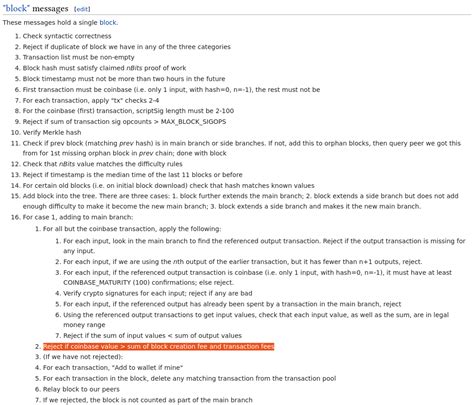
So why don’t miners just validate each other’s blocks? There are several reasons for this:
- Security: If miners were to validate each other’s blocks, an attacker could manipulate the network by having multiple nodes validate their own blocks, allowing them to spend coins undetected.
- Energy Consumption: The energy required to solve the complex math problems is proportional to the miner’s computational power. By having individual nodes verify each block, the network can use its resources efficiently, reducing the likelihood of an attack succeeding.
- Network decentralization: If miners validated each other’s blocks, a centralized authority would be created that could control the entire network. Decentralized validation ensures that the network is more resilient and less susceptible to manipulation.
The role of other nodes
In Ethereum’s PoW consensus algorithm, the “mining pool” plays a crucial role in validating blocks. This group of nodes consists of miners who have solved the math problem and are willing to add their block to the blockchain. When a new block is added, it is broadcast to all nodes on the network, which then verify its validity.
Conclusion
In summary, Ethereum’s consensus mechanism is based on proof-of-work rather than validation by individual nodes. This design allows for efficient energy consumption, reduces the likelihood of centralization, and ensures the security and decentralization of the network. While it may seem counterintuitive at first, this design has proven to be a robust and resilient system that supports the growth and adoption of Ethereum and other blockchain networks.